From the fourteenth through the nineteenth century, the Northern Hemisphere entered a prolonged period of colder climate, departing from the warmth that had prevailed for centuries.This era is now commonly known as the Little Ice Age. The cooling of the climate brought famine and epidemic disease, which in turn became one of the underlying causes of war.
The plague swept across Europe. In Japan, famine and pestilence spread throughout the land, followed in relentless succession by devastating earthquakes, tsunamis, and wars. A chronicle from 1461 records that the great avenue of Kyoto, then the capital of Japan, was so filled with corpses that they covered the roadway. Suzaku Avenue, the city’s principal boulevard, measured some eighty-four meters in width.
Countless lives were lost across the world. Humanity could no longer rely upon the social order that had flourished during the age of climatic warmth; it was compelled instead to create a new order capable of enduring a colder and harsher world.
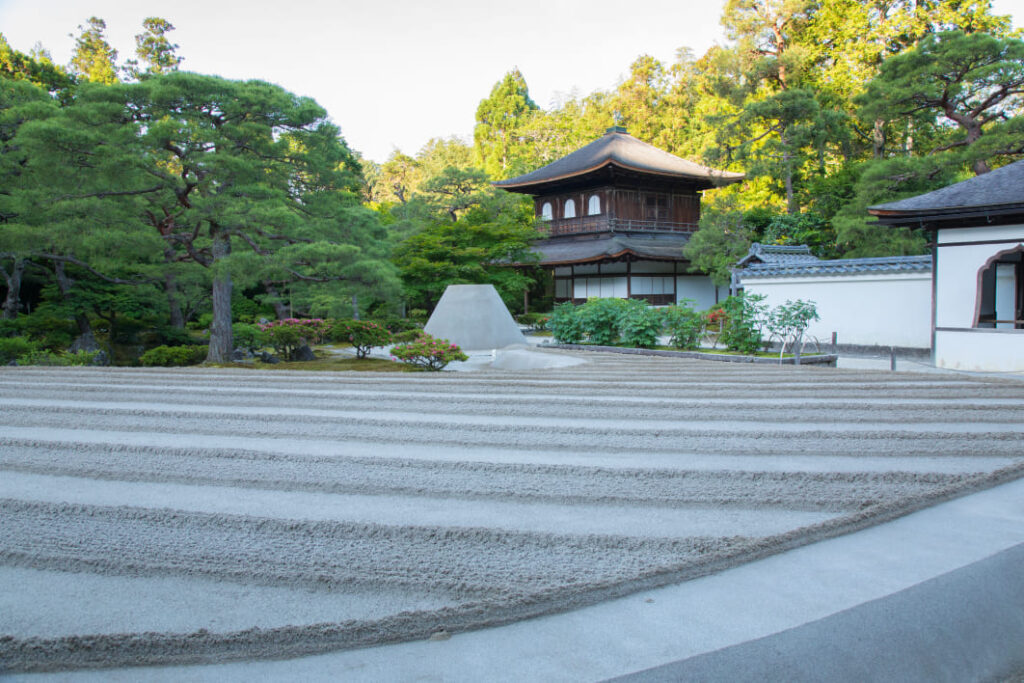
The birth of this new social order was accompanied by the flowering of new ideas and new forms of culture. In antiquity, religion and the arts had belonged largely to the aristocracy. During the medieval age, however, they gradually descended into the lives of ordinary people. In fifteenth-century Japan, many of the traditions that still form the foundation of Japanese culture came into full bloom: Zen Buddhism, shoin-zukuri architecture, landscape gardens, the art of flower arrangement (ikebana), the tea ceremony, Noh theatre, and monochrome ink painting.
境内案内
One of the works that emerged a bit earlier, during the early medieval period, is The Tale of the Heike. It chronicles the wars of the late 12th century. While it is regarded as a literary masterpiece today, it was originally passed down through oral tradition. A pervasive Buddhist philosophy—the idea that nothing lasts forever—runs through the entire work.
In the medieval era, everyone—whether good or evil, aristocrat or monk, and of course, the common people—died abruptly and with equal helplessness from famine, natural disasters, plagues, and war. Hojoki (An Account of My Hut), an essay from the same period, notes: “The cycle of dying in the morning and being born in the evening is just like the foam upon the water.” To the people of the medieval age, human existence was something that could vanish in the blink of an eye.